ServicesReverse Osmosis
Reverse Osmosis Systems in Sun City
Reverse osmosis gives you filtered water for drinking, coffee and cooking from its own faucet at the kitchen sink. We test your water first, explain what we find in plain words, and only then talk about whether an RO system is the right fit for your home.
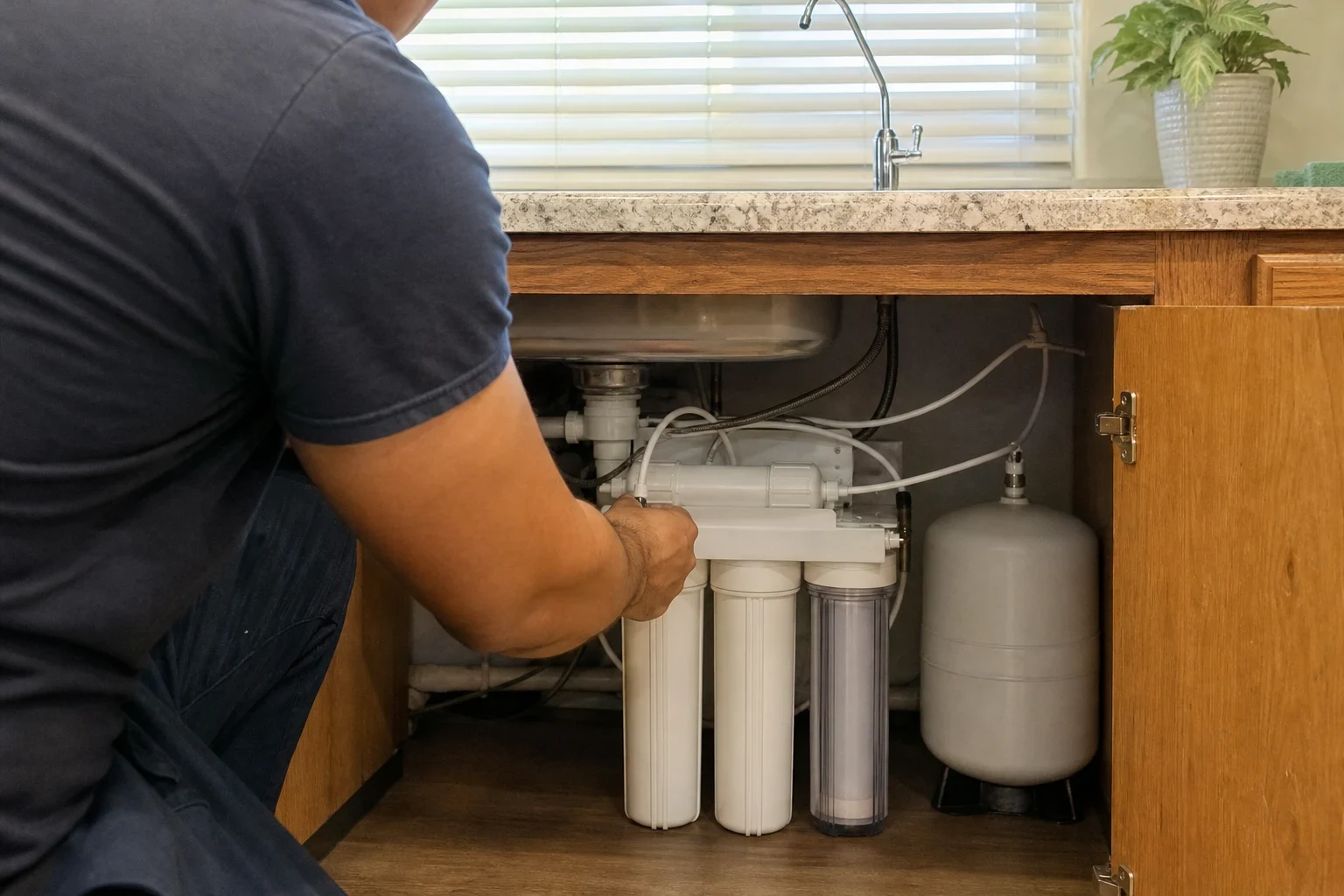
How Reverse Osmosis Works Under Your Sink
The system fits in the cabinet below your kitchen sink. Water first passes a sediment filter and a carbon filter. Your home's water pressure then pushes it through a semi-permeable membrane whose pores are too fine for dissolved minerals, sodium and many trace contaminants, and those get flushed to the drain. A final carbon stage polishes the taste on the way to a small faucet of its own.
Since it feeds a single faucet, RO treats your drinking and cooking water, not every tap in the house. Chlorine smell in the shower or scale on fixtures around the home needs another approach, typically whole-home filtration or a water softener. Many homes run RO alongside one of them.
We offer a free water test with zero obligation before any recommendation. You see the numbers, we explain what they mean, and the choice is yours.
What Your RO Installation Includes
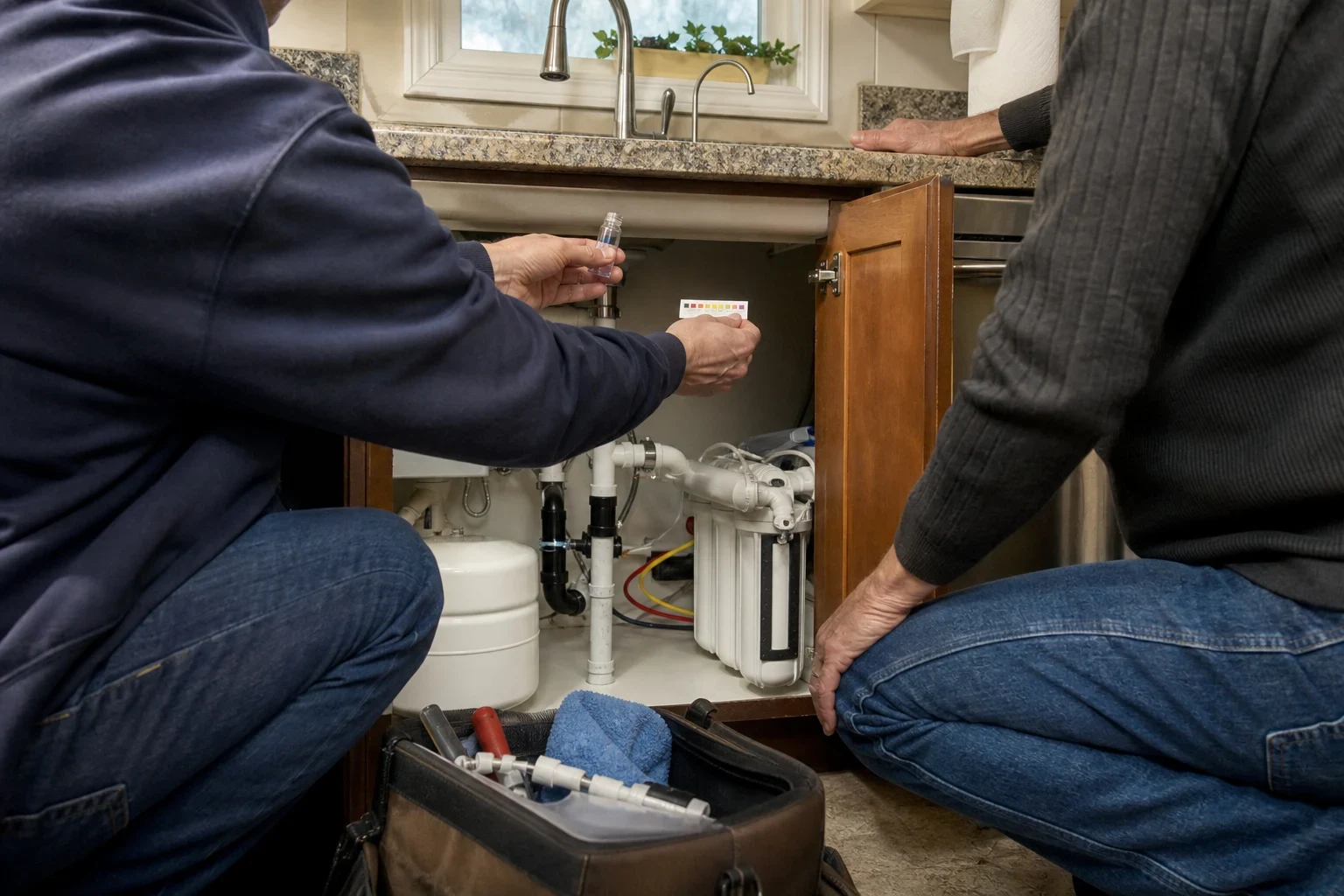
- Water test and findings
- We check dissolved solids, hardness and your water pressure at the tap. Those numbers tell us whether RO will help and which setup suits your water.
- Multi-stage system fitted under the sink
- Prefilters, membrane, storage tank and post filter are mounted neatly so you can still use the cabinet. We leave room to reach the filter housings when it is time to change them.
- A separate spout for filtered water
- Your filtered water comes from its own small spout beside the main kitchen faucet. If the sink has a spare opening, such as an old sprayer or soap dispenser spot, we use it. Otherwise we drill one in the sink deck or countertop, and we agree on the spot with you first.
- Drain and feed connections
- A valve tees into your cold water line and a drain saddle connects to the sink drain. Both are checked for leaks under pressure before we leave.
- Optional refrigerator line
- If you would like your ice maker and door dispenser to use RO water too, we run tubing from the cabinet over to the fridge whenever the kitchen layout gives us a clear path.
- Walkthrough and filter schedule
- We show you how the system works, where the shutoff is, and roughly when each filter and the membrane will need changing for your water. Install included with water treatment systems.
Signs an RO System Could Help
You buy bottled water every week
If you are hauling cases home because you do not like the tap, an RO faucet can replace most of that. For a lot of people, that alone makes it worth it.
White crust on the kettle and coffee maker
Mineral scale inside small appliances points to high dissolved solids. RO removes most of those minerals from the water you heat and drink.
Tap water tastes salty, flat or chemical
Taste is the most common reason people call us. A test shows whether minerals, chlorine or both are behind it, so the fix matches the cause.
Cloudy ice cubes or spots on glasses
Minerals left behind as water freezes or dries show up as haze and spotting. Filtered water from the RO faucet usually leaves much less behind.
Questions about older plumbing
If your home has older pipes and you want extra assurance on drinking water, testing is the first step. RO is one of the more effective options for what comes out of the tap.
How an RO Install Works, Step by Step
- 1
Your phone call
Tell us what is bothering you about your water. We can give you installed system pricing and set up a free water test.
- 2
Test and plain findings
We test at your tap, check the space under your sink and show you the results. If RO is not the right answer, we say so and explain what would be.
- 3
Install day
We shut off the cold supply, lay down a mat in the cabinet and fit the system, faucet, tank and drain line. Most single-sink installs take a few hours.
- 4
Flush, check and clean up
New filters are flushed, the tank fills and every fitting is checked for drips. We take the packaging with us and wipe down the cabinet.
What Moves the Price of a Reverse Osmosis System
Install included with water treatment systems, so the price you hear covers the equipment and fitting it in your home. What changes that number is the system you choose and what your kitchen and water need. We give you installed system pricing by phone and go over each piece so nothing comes as a surprise.
- System type and stages
- A standard tank system costs less than a tankless unit with a higher flow rate. Add-ons like a remineralization stage also change the price.
- Faucet location and countertop
- Using an existing sink hole is simplest. Drilling through quartz or granite takes more time and the right bits.
- Extra connections
- Running a line to the refrigerator or a second faucet adds tubing, fittings and labor.
- Your water conditions
- A membrane needs steady pressure behind it, so a home with weak pressure at the tap may need a small booster pump added. Very hard water can wear a membrane out sooner, which is why we may suggest pretreatment after the test.
Common Questions About Reverse Osmosis
Something not covered here? (480) 630-8217
How much water does an RO system waste?
A portion of the water rinses the membrane and goes down the drain, and that is normal. Newer systems use much less than older ones, and a booster pump in a home with low pressure improves the ratio further. We tell you what drain rate to expect from the system we suggest.
Does RO remove healthy minerals?
Yes, it strips out most dissolved minerals along with everything else it filters. Most people get far more calcium and magnesium from food than from water. If you like a little mineral taste, an optional remineralization stage puts some calcium and magnesium back.
Do I need a softener along with RO?
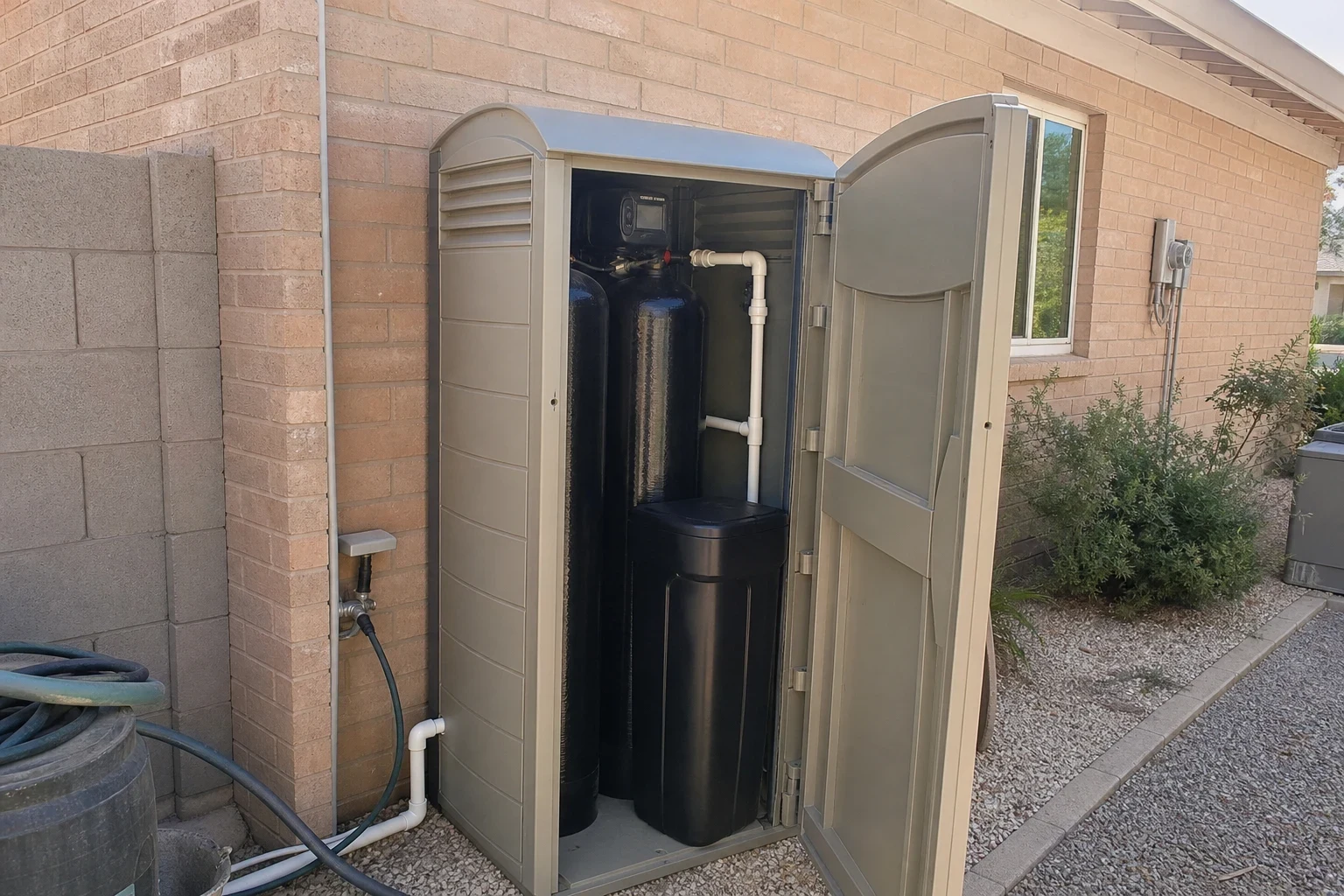
Not always. RO treats drinking water at one sink, while a softener handles hard water for the whole house. If your test shows high hardness, a softener can protect the membrane and your appliances, and we tell you straight whether adding one makes sense.
When do the filters and membrane need changing?
The sediment and carbon cartridges are usually replaced every six to twelve months, and the membrane lasts considerably longer. Timing depends on your water and how much you use for drinking and cooking. We base a realistic schedule on your test results and write it down for you.
Will an RO unit fit in my sink cabinet?
In most kitchens it fits, even with a garbage disposal. We look during the water test visit, and if space is tight, a compact or tankless model usually works.
Find Out if RO Is Right for Your Water
Start with a free water test with zero obligation. We will show you what is in your tap water and give you a clear answer on whether reverse osmosis is worth it.