ServicesWater Testing
Water Testing in Sun City, Read Out Plainly
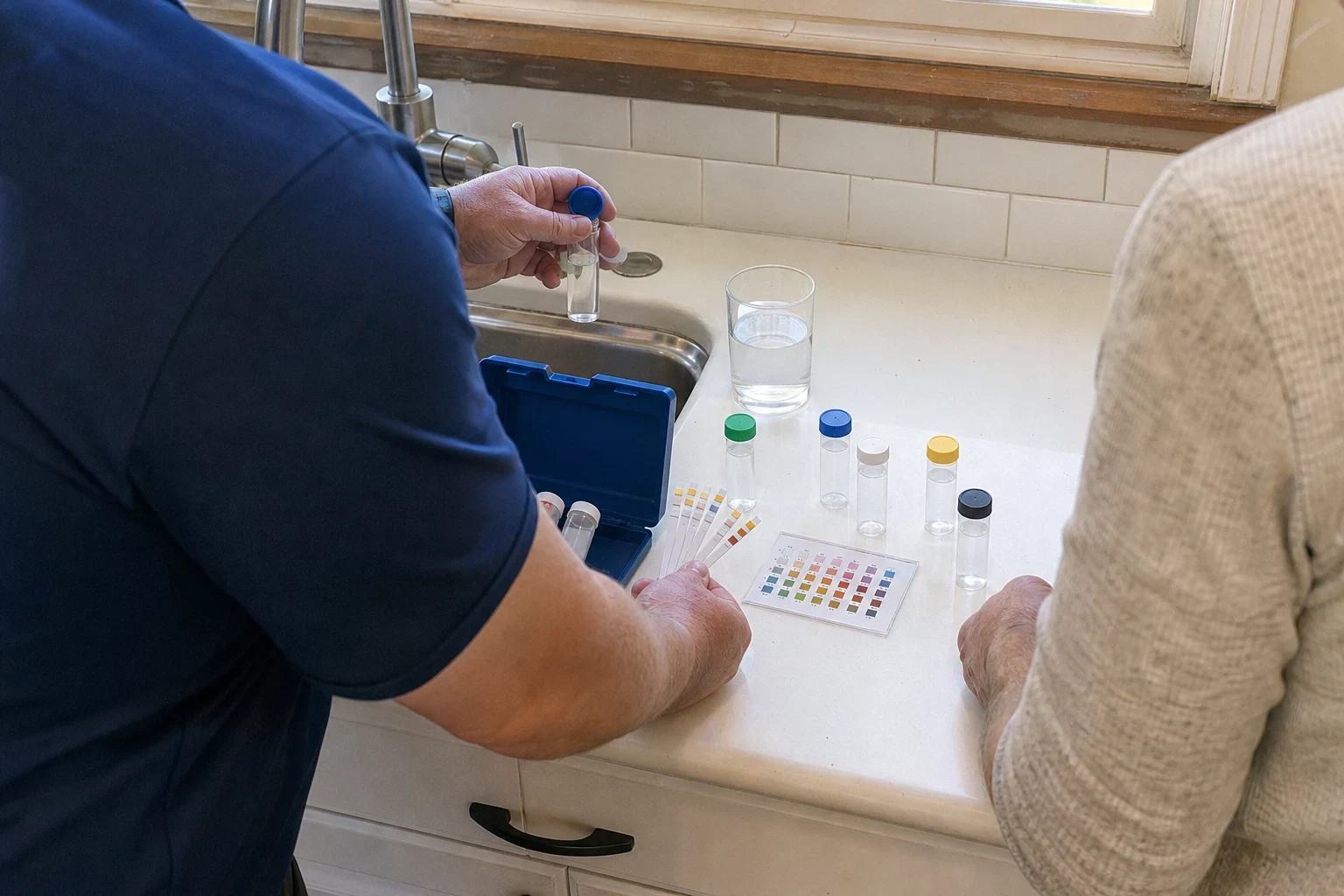
We come to your home, test the water at your own tap and walk you through every reading in everyday language. You see the numbers first. If your water is fine, we tell you so, and there is zero obligation either way.
Know what is in your water before you spend a dollar
A lot of people shopping for a water softener or filter have never seen a test of their own water. They are going by spots on the shower door, a salesperson's opinion or a neighbor's setup. That is a shaky way to choose equipment that sits in your home for years.
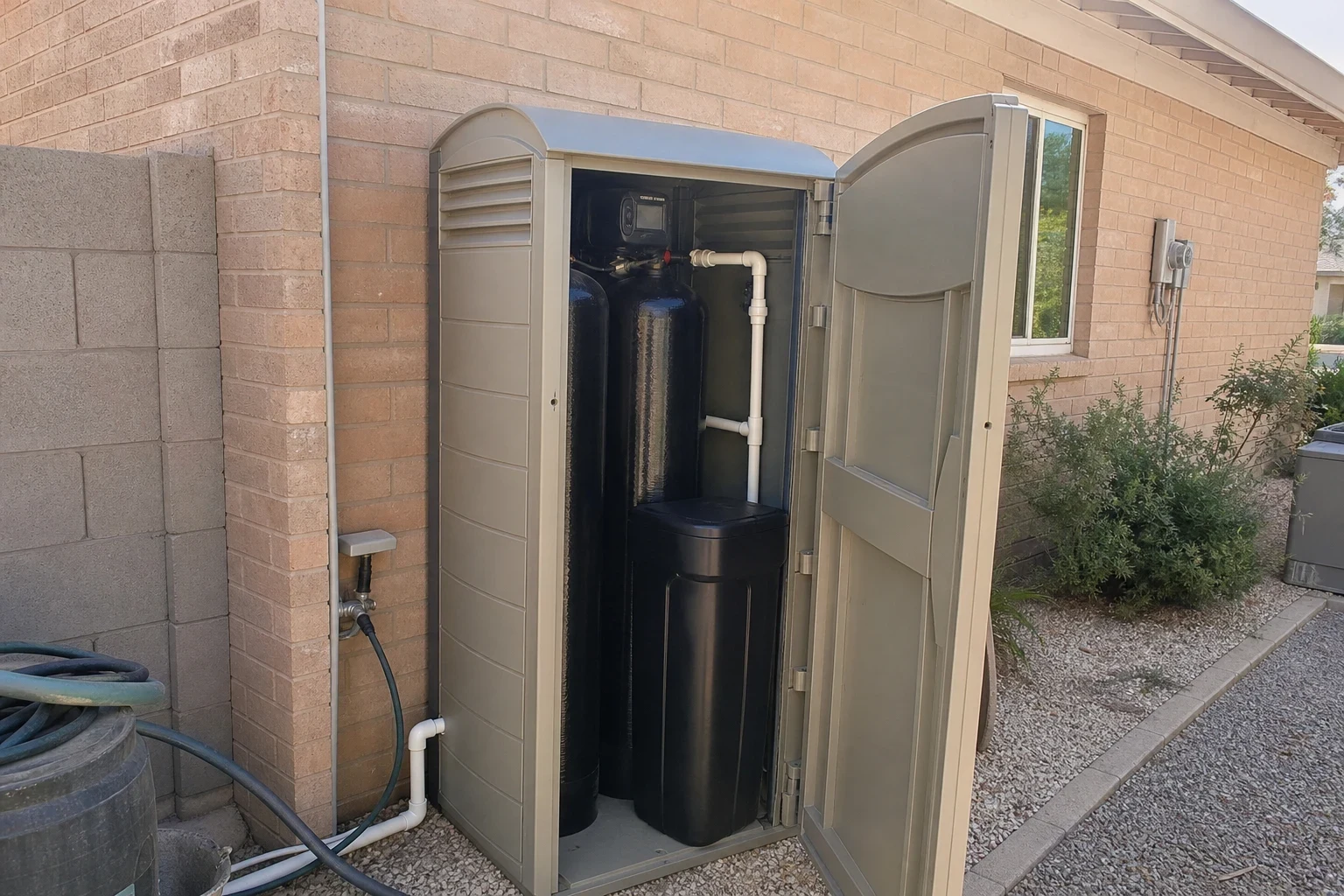
Our water test fixes that. We measure what is actually coming out of your faucet, show you each result and explain what it means for your pipes, fixtures and drinking water. Only then do we talk about whether whole-home filtration, a water softener or reverse osmosis would help, or whether you need nothing at all.
The test is free with zero obligation. You keep the results whether or not you buy anything from us.
What the test covers
- Hardness
- We measure the calcium and magnesium that leave white crust on faucets and build scale inside water heaters. This single number decides whether a softener makes sense for your home.
- Total dissolved solids
- A TDS reading shows the overall mineral load in your water. It helps us tell whether a reverse osmosis system at the kitchen sink would make a noticeable difference in taste.
- Chlorine
- City water is disinfected, and some people notice the taste and smell more than others. We check the level so you know whether carbon filtration is worth considering.
- pH and iron
- These readings help explain staining, odd tastes or wear on fixtures.
- Your fixtures and plumbing
- We look at the faucets, shower heads, water heater area and where your main line enters. Scale buildup and pipe material tell us as much as the meter does.
- A plain summary
- Before we leave, we go over each result with you and write down what we found. If a lab test would answer a question better than an in-home test, we tell you that too.
Signs it is time to test your water
White crust on faucets
Chalky rings around faucets and clogged shower heads usually point to hard water. Much of the Valley has it, but how hard yours runs is worth knowing before you buy a softener.
Spotty dishes and stiff laundry
Spots that will not rinse off glasses, and towels that feel scratchy, are often minerals at work. A test confirms it.
A taste or smell you dislike
If you reach for bottled water because tap water tastes of chlorine or minerals, a test shows which one is the cause and what would fix it.
Crackling sounds from the heater
Knocking or crackling while your water heater runs often comes from mineral sediment collected in the bottom of the tank. A hardness reading shows whether your water is feeding that buildup.
You already have a system
Older softeners and filters can stop doing their job without any obvious warning. Testing the treated water shows whether yours is still working.
You are about to buy equipment
If someone has quoted you a system, a test of your own water is the simplest way to check that it fits.
What the test costs and what shapes a system price
The water test is free, with zero obligation. If your results point to a system, the price depends on what the test found and on your home. Install is included with our water treatment systems, so the number we give you covers the equipment and putting it in.
Your test results
Very hard water calls for a larger softener than mildly hard water. Chlorine taste alone may need only carbon filtration.
Size of your home
More bathrooms and more people mean higher flow, and the system has to keep up without dropping pressure.
Plumbing access
Some homes have a ready connection point near the main line or water heater. Others need extra piping to reach a good spot.
Type of system
Whole-home filtration, a softener and an under-sink reverse osmosis unit each involve different equipment and work. Some homes do well with one, others with a combination.
How your water test works
- 1
You give us a call
Share what you have noticed about your water and anything you are wondering about. Then we pick a visit time that suits you.
- 2
Samples from your faucet
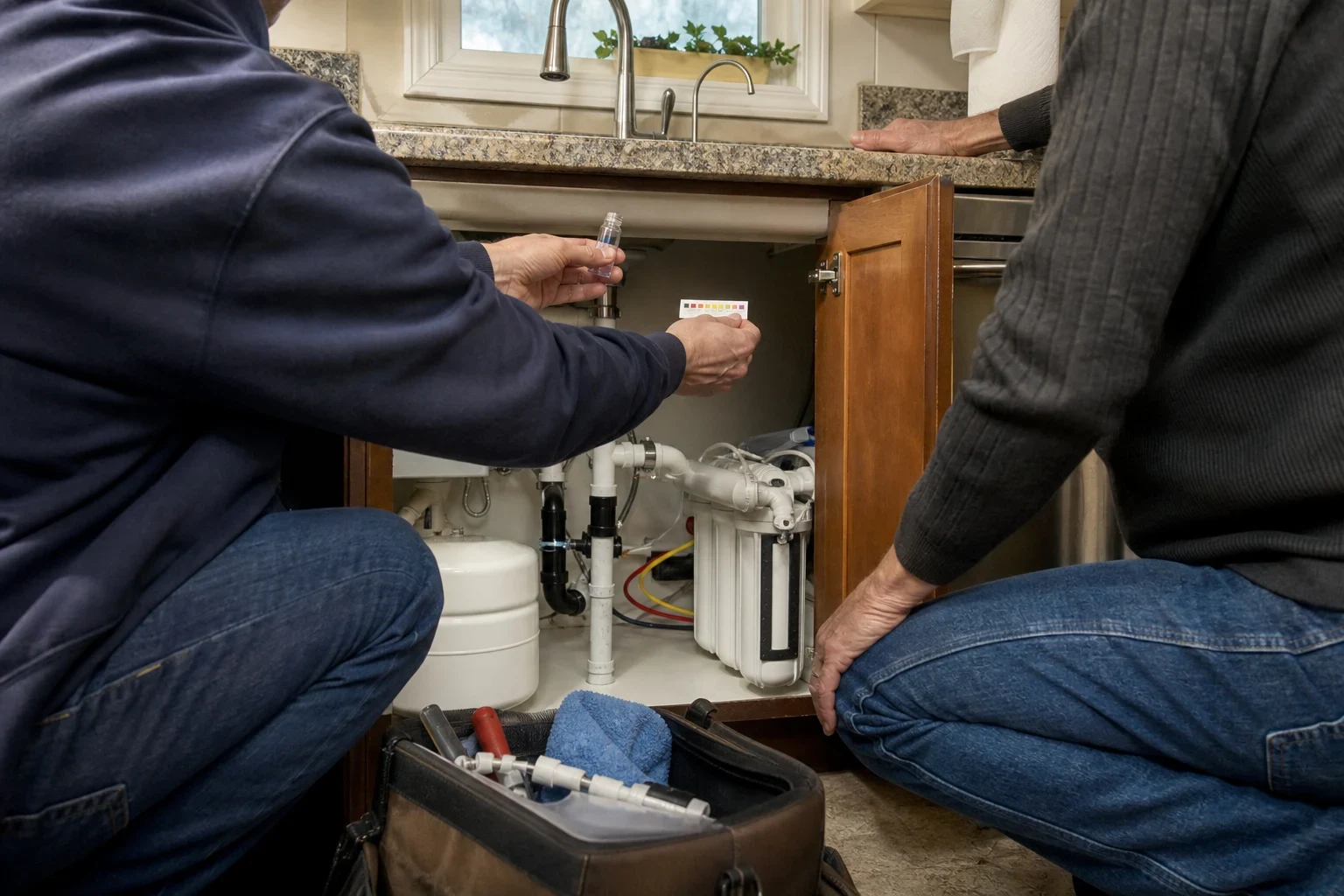
We take water from the kitchen faucet, plus before and after any system you already own. Most of the readings happen on the spot, in front of you.
- 3
A check of your plumbing
We look over your fixtures, the area around the water heater and the main line, so each reading fits the picture of your home.
- 4
Going over the numbers
We sit with you and cover each result. You learn which readings are normal, which run high and which ones matter for your household.
- 5
Choices, if you ask for them
When a reading is worth treating, we tell you which system fits and why. When nothing needs fixing, we tell you that, and you owe nothing.
Water testing questions
Do you really charge nothing for the test?
Correct. There is no fee and zero obligation. Picking the right system takes real readings, so we test first, and the results are yours to keep no matter what you choose.
How much time should I set aside?
Expect an unhurried visit, not a five-minute stop. The readings themselves are quick, and we save the rest of the time for walking through them and answering whatever you want to ask.
My city puts out a water report. What does a tap test add?
The city's report covers water as it leaves the treatment plant. By the time it reaches your faucet, it has passed through your pipes, your water heater and any equipment already installed. Your tap shows the water your household really uses.
Does your test check for lead?
The in-home test looks at hardness, dissolved minerals, chlorine, pH and iron. When lead is the worry, especially in a home with older pipes, we will be straight with you that a lab analysis answers that question better. If a lab does find lead, we can explain how a reverse osmosis unit at the kitchen sink treats the water you drink and cook with.
Is the test a sales pitch?
No. You see the readings first, and we explain them in plain terms. When your water needs no treatment, we say that and stop there.
Will you check the softener I already have?
We will. We take a sample before your system and one after it to find out if it still softens or filters. Sometimes the finding is that it is doing its job.
See your own numbers before you decide
One call sets up a free test at your kitchen tap. You get clear results and an honest read on whether you need anything at all.