ServicesWater Softeners
Water Softeners in Sun City, Sized From Your Hardness Test
If your faucets keep growing white crust and your glasses never come out clear, minerals in your water are the likely cause. We start with a free hardness test and a look at your plumbing, then give you plain findings on whether a softener fits and what size suits your home.
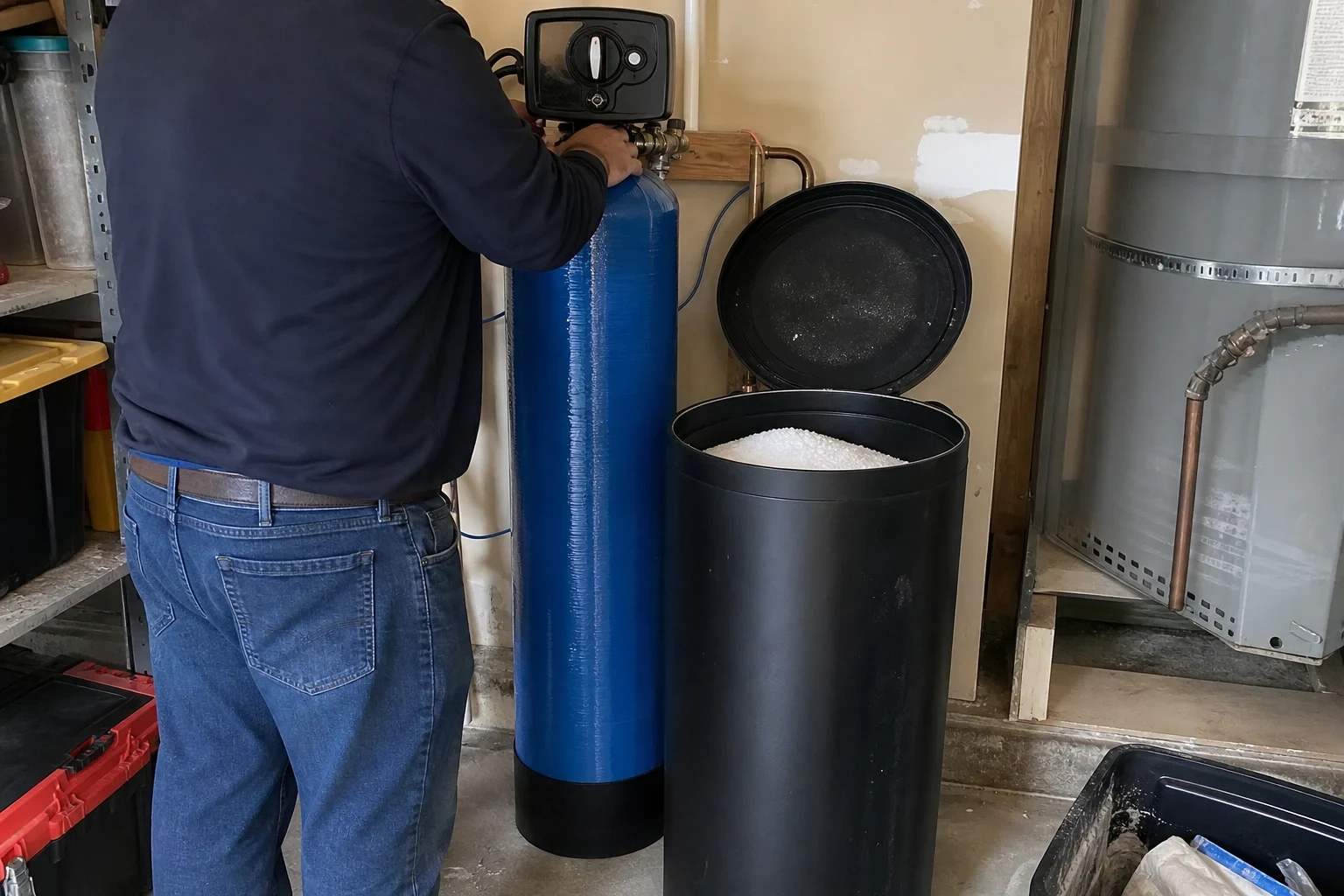
What a Softener Does for Your Home
Calcium and magnesium ride along in hard water without you noticing. Heat the water or let a drop dry on the counter, and those minerals are left behind as scale. A softener trades them out as water passes through a tank of resin beads, so your faucets, water heater and dishwasher collect far less buildup.
Hard water is common across the West Valley, but the right softener still depends on your own numbers. We measure hardness at your tap, ask how many people live in your home and check where the main line comes in. Then we explain what we found in plain words before we recommend anything.
If your main worry is taste or chlorine smell, a softener won't fix that. We'll tell you so and point you toward whole-home filtration or reverse osmosis instead.
What Your Softener Install Includes
- Free hardness test
- We test the water at your tap so the softener is sized to real readings, not a guess. The test comes with zero obligation.
- Plumbing check before quoting
- We look at your main line, any existing softener loop, the nearest drain and an outlet. Problems like corroded fittings get pointed out up front, not discovered on install day.
- Sizing and valve setup
- We match resin capacity to your hardness and household water use, then set the control valve so it regenerates when needed instead of on a wasteful fixed schedule.
- Installation included
- Install is included with our water treatment systems. That covers the bypass valve, the drain line with a proper air gap and the hookup to your plumbing.
- Startup and walk-through
- We load the brine tank with salt and run the first regeneration cycle. Then we walk you through the controls: where the salt goes, what the display is telling you and how to flip the bypass if a plumber ever needs it.
How to Tell Your Water May Need Softening
Scale that keeps coming back
Faucet aerators, showerheads and the edge of the tub spout grow a pale, gritty buildup that reappears within days of a good scrub.
Cloudy glasses and hazy shower doors
Drinking glasses leave the dishwasher with a dull film, and the glass in your shower never looks fully clean, even after you switch cleaners.
Rumbling from the water heater
Mineral sediment settles at the bottom of the tank, and heat pushing up through that layer makes a popping sound. The same layer forces the heater to burn more energy to get your water hot.
Soap that won't lather
Shampoo and dish soap seem to need double the amount, and skin or hair can feel dry after a shower.
Appliances giving out early
Scale clogs the small passages in dishwashers, coffee makers and evaporative coolers, so parts fail sooner than they should.
An old softener that stopped keeping up
If you already have a unit but the spots are back, it may be undersized, worn out or simply set wrong. We'll check before suggesting a replacement.
What Moves the Price of a Softener
Every home's number is different, so we don't quote before we've tested and looked. Once we have, you get installed system pricing that reflects your water and your plumbing. These are the things that move it most.
Your hardness and household size
The more minerals in your water and the more people using it, the more resin capacity the softener needs. Getting the size right also keeps salt and water use down, since an undersized unit regenerates far too often.
Existing softener loop
Many homes already have a loop in the garage plumbed for a softener. If yours does and it's in good shape, the hookup is simpler.
Location and access
Distance to a drain and outlet, tight closets or a main line that needs rerouting all add work.
Removing an old unit
Hauling away a worn-out softener and replacing tired fittings or valves adds time we'll show you on the quote.
How a Softener Job Goes, Start to Finish
- 1
Talk it through by phone
Tell us what you're seeing around your home. We'll set up a visit for your free water test and answer early questions on the call.
- 2
Test and inspect
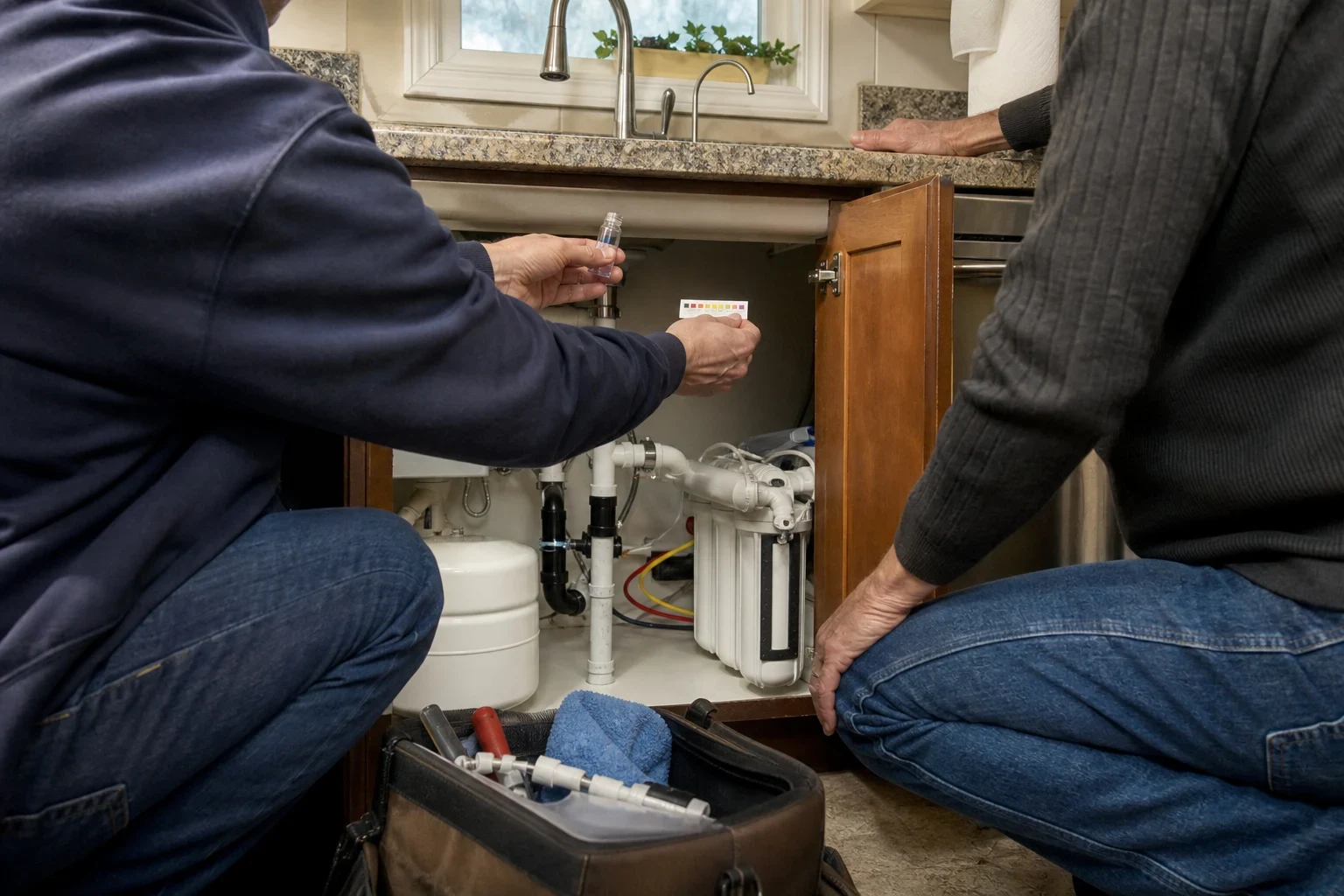
At your home we measure hardness, check the plumbing where a softener would connect and note the space, drain and power available.
- 3
Plain findings and pricing
We show you the readings, explain what they mean and give you installed system pricing. If a softener isn't the right fit, we say so.
- 4
Install day
We lay down floor protection, shut off the main and connect the softener, bypass and drain line. Your water is off for only part of the day, and we'll tell you before we turn it back on.
- 5
Program, test and tidy up
We set the valve to your hardness reading, run a regeneration cycle and test the softened water at a faucet so you can see the change. The work area gets cleaned before we head out.
Water Softener Questions
How do I know if I actually need a softener?
A hardness test answers it. We test your tap water during a free visit and walk you through the reading. If your water and your concerns point to something else, we'll tell you plainly.
Will softened water taste salty?
Most people don't notice a taste. Softening does add a small amount of sodium, so if you'd rather avoid it for drinking and cooking, a reverse osmosis system at the kitchen sink is a common pairing.
How often will I need to add salt?
It depends on your hardness, how much water your home uses and the size of the brine tank. We'll show you how to check the level and give you a realistic idea based on your readings.
Can you use the plumbing from my old softener?
Often, yes. We inspect the existing loop, bypass and drain first. If they're sound we connect to them; if not, we show you what needs replacing and why before any work starts.
Does a softener remove chlorine or improve taste?
No, a softener handles hardness minerals. For chlorine taste and smell, whole-home filtration is the better tool, and some homes use both.
Find Out What Your Water Really Needs
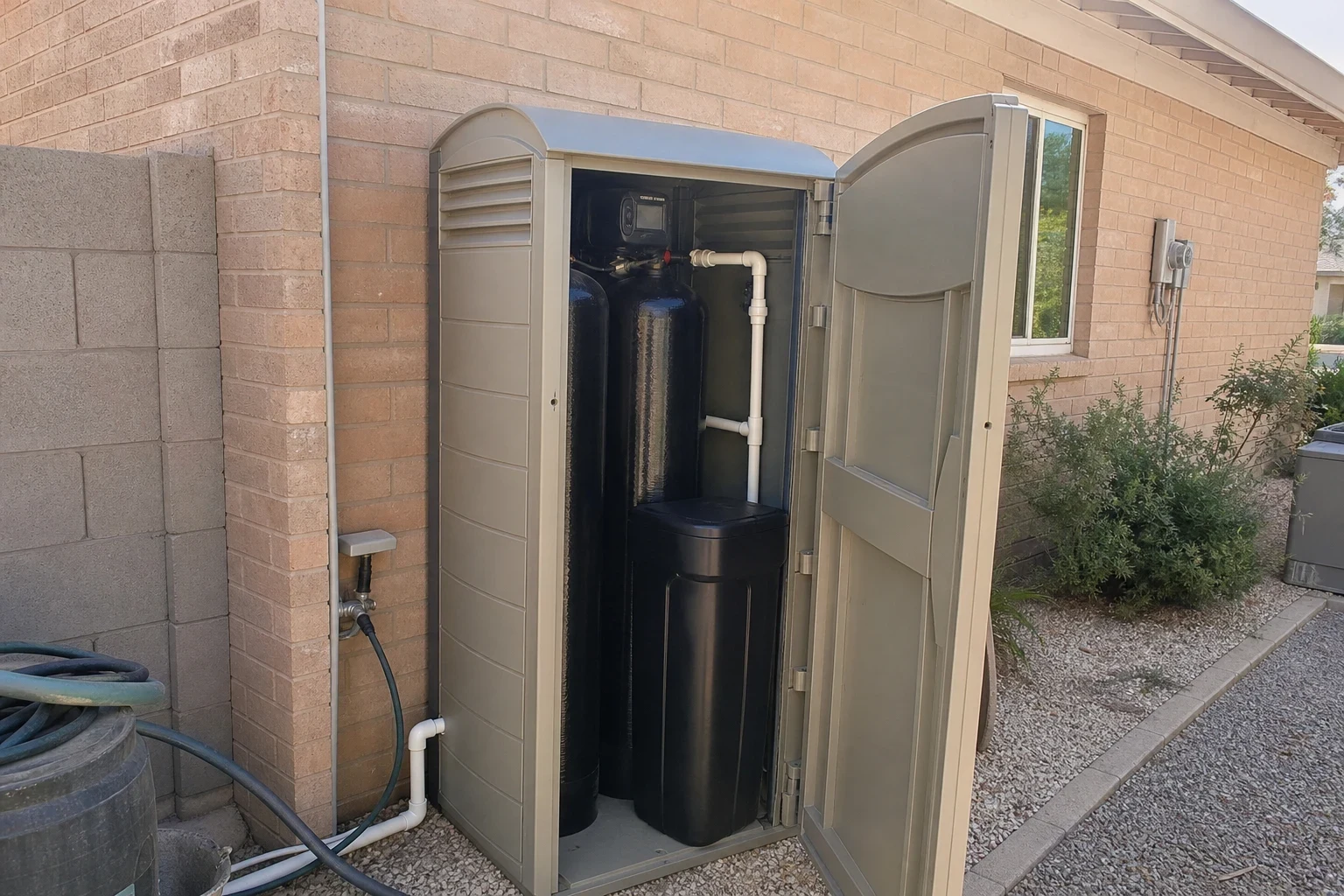
We'll test your hardness, check your plumbing and give you straight findings before any recommendation. The test is free, with zero obligation.